How Much Does a Custom Hobby Shop Building Cost in Montana?
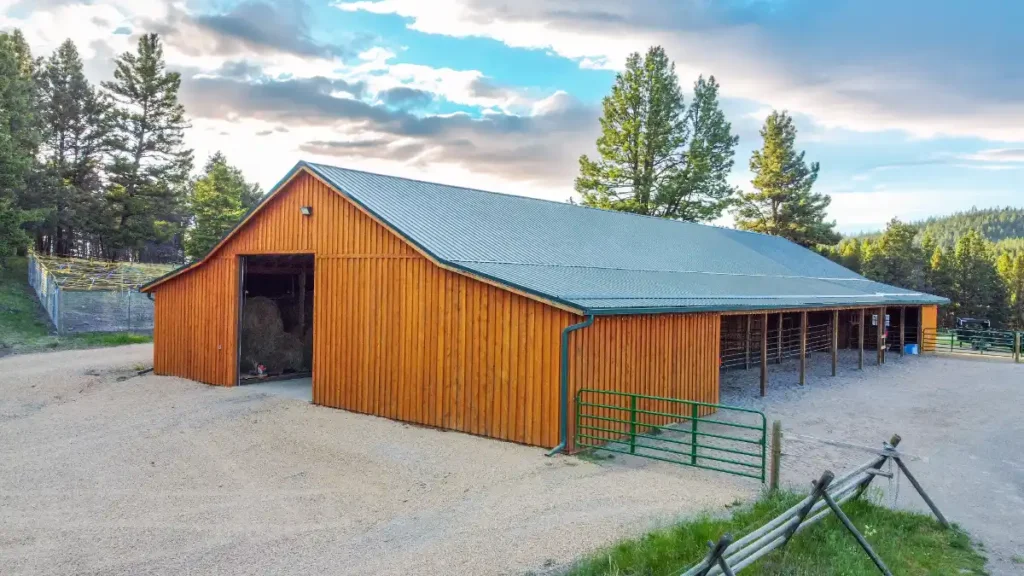
For planning purposes, a custom hobby shop building in Montana runs from around $50,000 for a basic shell to six figures for a larger, fully finished shop, a range consistent with H&H Custom Buildings’ own post-frame projects across the Helena Valley.
Where a project lands in that range depends on size, site work, concrete, insulation, electrical, doors, and interior finish level. There is no single price per square foot that applies to every hobby shop, since ceiling height, door count, and site conditions all move the number.
What Is a Hobby Shop Building?
A hobby shop building is a dedicated structure built for personal projects. Montana property owners use hobby buildings for woodworking, metalworking, vehicle restoration, ATV and boat storage, or a mix of all three under one roof.
Compared with a basic garage, a hobby shop building offers:
- Wider bays and taller ceilings for equipment and lifts
- Insulation and heat for year-round use
- Dedicated electrical circuits for tools, welders, and compressors
- Room for a workbench area, storage loft, or small office
Many buyers describe what they want rather than naming a building type, something like a heated shop with a couple of overhead doors and room for a truck and a workbench. That description is a hobby shop building, and it is also the starting point for pricing one.
Average Cost of Hobby Shop Buildings in Montana
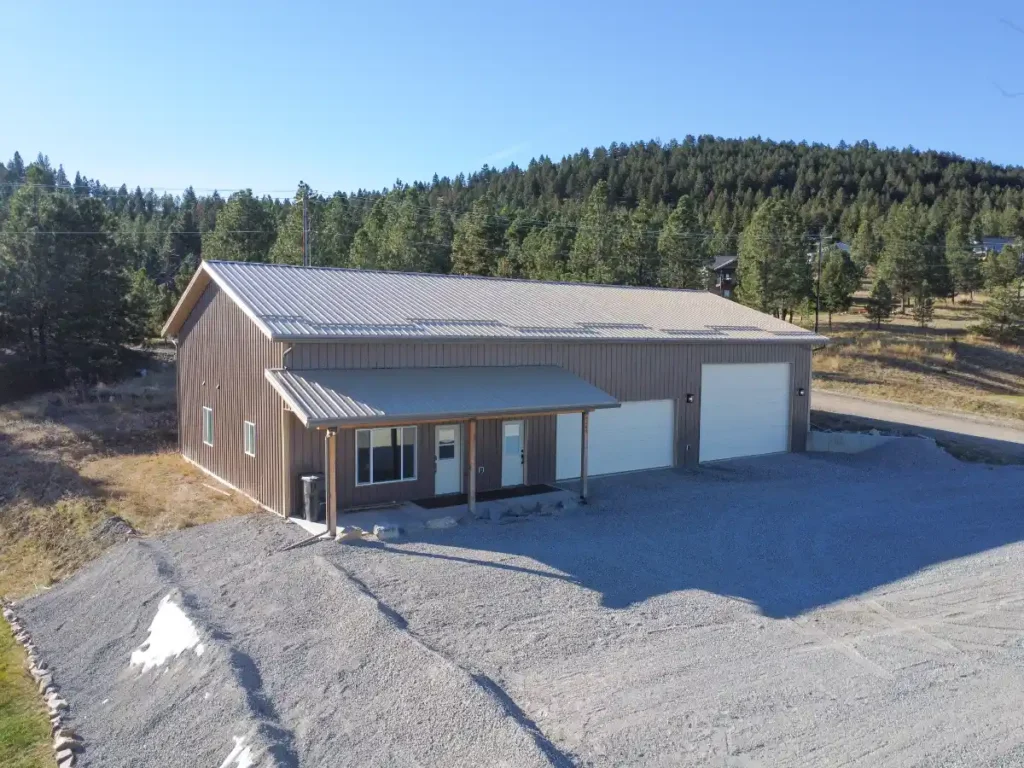
For planning purposes, many custom hobby shop buildings in Montana fall between roughly $50,000 and $100,000, with larger or more finished shops moving well past that. This mirrors the range H&H Custom Buildings has seen across its own post-frame projects in the Helena Valley.
Three broad categories cover most projects:
|
Building Type |
Best For |
Where It Falls in the Range |
|
Basic hobby shop shell |
Storage, seasonal use, simple workspace |
Lower end of the range |
|
Standard post frame garage |
Vehicles, tools, small workshop |
Middle of the range |
|
Finished hobby shop building |
Heated shop, insulation, electrical, slab, overhead doors |
Upper end and beyond |
Actual project pricing depends on site conditions, specifications, materials, and current labor costs, so these categories are a planning reference rather than a quote. Custom builders can walk you through where a specific project is likely to land once the size, doors, and finish level are defined.
Why Online Kit Prices for Barn Kit Workshops in Montana Can Be Misleading
Many property owners start their research by comparing custom builders and barn kit workshops, with prices listed online. Kit pricing almost always covers materials only. It excludes excavation, the concrete slab, labor, doors, electrical, insulation, permits, and Montana-specific engineering for snow and wind loads.
A 40-by-60 kit that appears inexpensive on a website can end up costing close to the price of a fully built structure once a finished slab, doors, labor, electrical, lighting, and insulation are added. Buyers comparing a kit price against a custom builder’s quote are often comparing a partial number against a complete one, which makes the kit look artificially cheaper.
A few questions help clarify what a kit price actually includes:
- Does the quote include the concrete slab, or just the building shell?
- Is site work, grading, and excavation part of the number?
- Are doors, windows, and man doors included, or priced separately?
- Does the kit account for Montana snow load and wind load requirements, or is that left to the buyer’s installer?
- Who handles labor, and is that included in the kit price or billed separately?
A custom quote from a builder who handles the full project, from site work through final finish, gives a more accurate picture of what a hobby shop building will actually cost from the ground up.
Main Factors That Affect Hobby Shop Building Cost
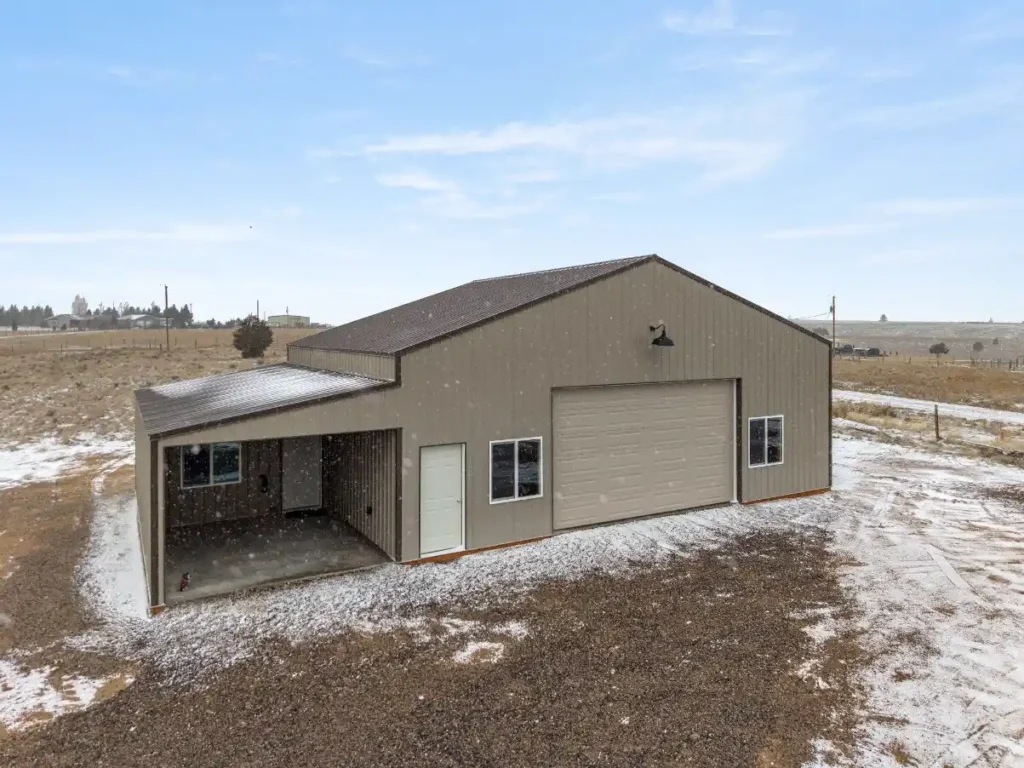
While size is usually the first factor buyers consider, the final cost of a hobby shop building depends on several interrelated factors. In Montana, the site, structure, concrete, doors, utilities, and finish level all work together to shape the final estimate.
Building Size and Footprint
A 30 by 40, 40 by 60, or 40 by 80 footprint changes material needs, roof structure, wall panels, and door count. Larger buildings can be more cost-efficient per square foot, but the total project investment still rises with size.
Site Prep, Excavation, and Access
Grading, drainage, driveway access, and soil conditions all factor into the estimate. A rural Montana property with slope or limited equipment access typically needs more site prep than a flat, in-town lot, and that difference shows up in the final number.
Concrete Slab and Foundation Choices
Concrete is one of the largest line items in a hobby shop project. Slab thickness, reinforcement, an apron, floor drains, and any radiant heat prep all add to the total, and skipping these details early is one of the most common reasons a kit price looks lower than it should.
Doors, Windows, and Openings
Overhead doors, especially taller RV height doors, cost more than standard sizes. Man doors, windows, and vent placement are smaller costs individually but add up across a full building, particularly when natural light and ventilation are priorities.
Insulation, Heating, and Year-Round Use
A cold storage shell costs less than a heated, insulated shop built for winter use. Spray foam, batt insulation, vapor barriers, and a heating system are where a basic shell and a true four-season hobby shop diverge in price, sometimes significantly.
Electrical, Lighting, and Shop Utilities
Outlets, 220-volt service for welders and lifts, LED lighting, and any plumbing or floor drains all add cost. These are worth planning early since retrofitting electrical systems after the shell is finished is more expensive than building them into the original design.
Interior Finish Level
An unfinished shell, a lined interior, and a fully finished workshop with a bathroom or loft each sit at a different price point. Finish level is usually the single biggest lever a buyer has over the final cost of a hobby shop building.
Thinking about the right size and layout before you request a quote? H&H Custom Buildings can walk through footprint, door placement, and finish level with you so your estimate reflects the building you actually need. Start Your Estimate.
Why Post Frame Construction Works for a Custom Post Frame Garage
Post frame construction uses large vertical posts instead of a continuous foundation wall, which is why it is the standard approach behind most custom post frame garage and hobby building projects.
Key advantages include:
- Wide open interiors with fewer load-bearing walls
- Flexible layouts for vehicles, tools, lifts, and storage
- Faster build timelines compared with some traditional building methods
- A strong structural fit for rural and semi-rural Montana properties
- Easier customization for door placement and bay sizing as needs change
H&H Custom Buildings builds post-frame shops, garages, and agricultural structures across the Helena Valley, and this method is the foundation of nearly every hobby shop and custom post-frame garage the company completes.
Montana Specific Cost Considerations
Montana conditions directly affect how a hobby shop is engineered, and engineering affects price. Snow load, sustained wind exposure, and freeze-thaw cycles all factor into the structural design, and specific requirements can vary by jurisdiction and local building official.
Site conditions also vary across different areas. A shop built on a windswept rural property outside Townsend may need different engineering than one built on a sheltered in-town lot in Helena, even at the same footprint, and that difference is reflected in the estimate.
Custom Hobby Shop vs. Barn Kit Workshop in Montana
|
Option |
What It Offers |
What To Watch For |
|
Barn kit workshop |
Lower material price, simple package |
Often excludes site work, slab, labor, permits, and utilities |
|
Custom post frame garage |
Engineered for your specific site, use, and Montana conditions |
Higher upfront quote than a kit alone |
|
Fully finished hobby shop |
Heated, insulated, wired for year-round work |
Highest investment of the three, but built for long-term use |
A barn kit workshop can be a reasonable choice for basic seasonal storage where site conditions are simple and finish level does not matter. For a shop meant to be used through Montana winters for years, a custom post-frame garage is generally the more durable, lower-hassle option once all costs are accounted for.
Example Hobby Shop Building Scenarios
Costs become easier to understand when the building is tied to a real use case. The examples below show how different hobby shop layouts can change the size, finish level, utilities, and features needed for the project.
Basic Storage and Weekend Hobby Shop
Built for ATVs, garden equipment, and light seasonal use, this type of hobby building remains a basic shell with fewer doors and no heating system.
Vehicle and Restoration Shop
Built for classic cars, trucks, lifts, and tools, this scenario usually calls for a larger overhead door, dedicated electrical circuits, and insulation for comfortable year-round work.
Woodworking or Fabrication Shop
Built around dust control, ventilation, and power needs, this scenario often includes 220-volt circuits, task lighting, and insulation to support extended shop time in any season.
Large Multi-Use Post Frame Garage
Built to hold RVs, boats, trailers, and hobby space under one roof, this scenario falls at the larger end of the size range and includes a more extensive finish package.
How to Budget for a Custom Hobby Shop Building
A little planning before requesting a quote makes the estimate more accurate and the process smoother.
- Decide what the building needs to store or support
- Choose a footprint and ceiling height based on actual use, not just square footage
- Plan door sizes and placement before finalizing dimensions
- Decide early whether the shop needs year-round heat
- Budget for concrete, insulation, and electrical as core costs, not add-ons
- Think ahead to future tools, a lift, or an RV that may need to fit
- Ask for an estimate based on the property and the plan, not a generic square footage number
Is a Custom Hobby Shop Building Worth It?
For many Montana property owners, a dedicated hobby shop pays off in a few practical ways.
- Protects vehicles, tools, and recreational gear from the weather
- Frees up space in the house or attached garage
- Creates a dedicated area built for the work being done in it
- Can be sized and wired with future needs in mind
- Holds up through Montana winters instead of just extending a season or two.
How H&H Custom Buildings Helps Montana Property Owners Plan Their Shop
H&H Custom Buildings has served the Helena Valley since 2005, building post-frame shops, garages, agricultural buildings, and post-frame living spaces for Montana property owners. The process moves from design and estimate to contract and scheduling, to the build itself, to a final walkthrough.
Rather than starting from a generic kit price, H&H prices the specific hobby shop building or custom post frame garage a property owner needs, based on the site, intended use, and finish level.
Frequently Asked Questions
How much does a hobby shop building cost in Montana?
For planning purposes, most custom hobby shop buildings in Montana range from around $50,000 to six figures, depending on size, site prep, concrete, insulation, doors, electrical, and finish level.
Is a post-frame garage cheaper than a traditional garage?
A post-frame garage is often more cost-efficient for larger shop-style buildings because it uses fewer materials, allows for a wide-open interior, and simplifies foundation work compared with some traditional building methods.
Are barn kit workshops in Montana cheaper than custom hobby buildings?
Barn kit workshops can look cheaper upfront, but many kits do not include excavation, concrete, labor, permits, electrical, insulation, or interior finish work. A custom quote usually gives a more accurate full project price.
What size hobby shop building should I build?
Common hobby shop sizes include 30 by 40, 40 by 60, and 40 by 80, depending on whether the goal is basic storage, vehicle bays, a workshop area, RV clearance, or room for future equipment.
Can a hobby shop building be heated and insulated?
Yes. A custom hobby shop can be insulated, heated, wired, and finished for year-round use, which matters most during Montana winters.
Get a Custom Hobby Shop Building Estimate in Montana
Thinking about building a hobby shop, a custom post-frame garage, or a workshop in Montana? H&H Custom Buildings can help you plan the right size, layout, doors, concrete, and finish level for your property. Request an estimate today and get a clearer picture of what your building will actually cost.