Do You Need a Permit for a Pole Barn in Lewis and Clark County?
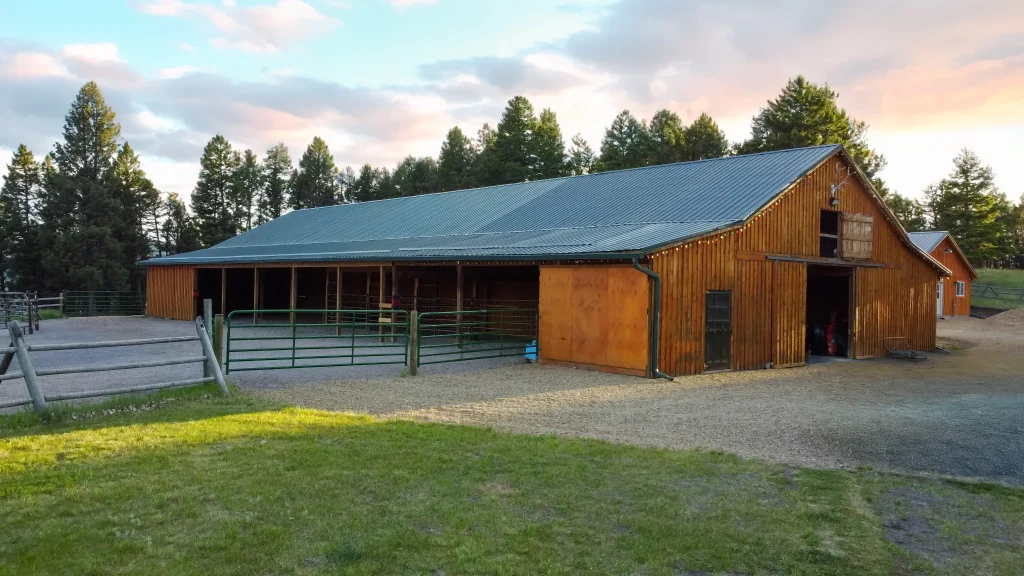
Whether you need a pole barn permit in Montana depends on two things: where your property is and how you’ll use the building. Inside Helena or East Helena city limits, the city’s building department handles building permits. In unincorporated Lewis and Clark County, the county has no building department. Montana law exempts farm and ranch buildings, private garages, and storage buildings from state building permits.
A building permit is only part of the picture, though. Septic, zoning, floodplain, electrical, and driveway approvals can still apply to an exempt building. Here’s how it works around Helena.
Do You Need a Permit for a Pole Barn in Montana?
Montana doesn’t have one statewide pole barn permit. Which agency reviews your building depends on the “authority having jurisdiction,” meaning the government office responsible for enforcing building codes where your property sits.
Some cities and counties run their own state-certified building code programs. According to the Montana Department of Labor and Industry, the state Building Codes Bureau covers all other areas.
Montana law also limits which buildings the state code covers. Under MCA 50-60-102, the state building code doesn’t apply to these buildings unless the local government adopts the code for them:
- Any farm or ranch building of any size
- Any private garage or private storage building of any size used only for the owner’s own use
- Residential buildings with fewer than five dwelling units
So the answer depends on the agency and on the building’s use.
Who Issues Building Permits in Lewis and Clark County?
Building permits in Lewis and Clark County come from one of three places, depending on where the property is. The City of Helena covers property inside Helena city limits. The City of East Helena covers property inside East Helena city limits. The State Building Codes Bureau covers everything else, including the Helena Valley.
Inside Helena City Limits
The City of Helena runs a state-certified program covering building, plumbing, electrical, and mechanical permits within city limits. The Helena Building Division enforces the 2021 International Codes for building and mechanical work, the Uniform Plumbing Code for plumbing, and the 2020 National Electrical Code. Montana rules and Helena City Code Title 3 amend all of these.
City rules apply to pole barns, shops, and detached garages inside Helena. Contact the Building Division at (406) 447-8438 before you design a building for an in-town lot.
East Helena
East Helena runs its own certified building program within city limits. The city has a building permit application, and its zoning ordinance controls where buildings can go on a lot.
Unincorporated Lewis and Clark County and the Helena Valley
Lewis and Clark County isn’t listed as a certified building code program. That means the state Building Codes Bureau has authority over building permits in unincorporated areas, including the Helena Valley.
For a farm building, private shop, or personal storage building, you usually don’t need a state building permit. The county still regulates land use, though. Its Community Development and Planning office handles zoning, floodplain permits, and addressing, while Lewis and Clark Public Health handles septic permits.
Do Agricultural Buildings Need a Permit in Montana?
In areas under state jurisdiction, agricultural buildings generally don’t need a state building permit. State law exempts “any farm or ranch building of any size,” and the Building Codes Bureau lists farm and ranch buildings as exempt from building permits.
The exemption is about how the building is used, not just whether it sits on farmland. Montana’s building rules follow the International Building Code definition of an agricultural building: a structure built to house farm implements, hay, grain, poultry, livestock, or other horticultural products.
Under that definition, the building can’t be a place where people live. It also can’t be a workplace where farm products are processed, treated, or packaged, or a building used by the public.
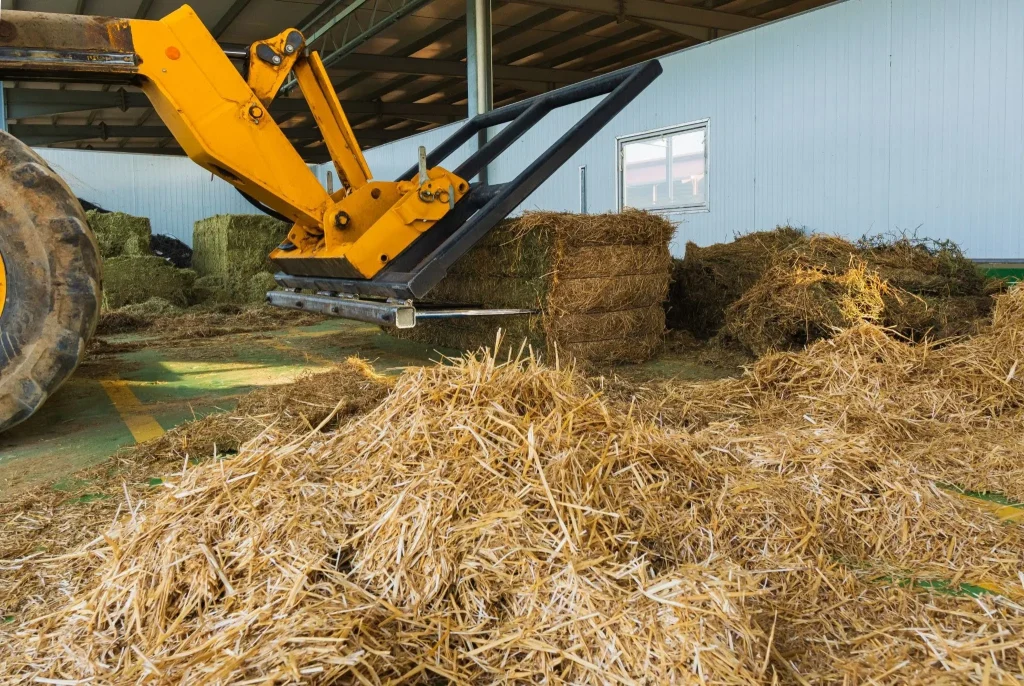
A hay barn, equipment shed, or livestock shelter on a working property usually fits. A building that hosts events or employs people packaging products usually doesn’t.
What Can Change a Building’s Exempt Status?
The Building Codes Bureau draws a clear line on private garages and storage buildings. A garage used for a commercial business, including vehicle repair or vehicle storage, doesn’t count as a private garage. A private storage building has to hold the owner’s personal belongings, not business equipment or supplies.
Here are common changes that can affect your permit requirements:
- Business use. Running a repair shop, contracting business, or rental storage operation out of the building can make it subject to state permits.
- Changing the use later. The state says permits apply to buildings that are built, remodeled, moved, or have their occupancy changed. Turning a hay barn into a business space can trigger a permit.
- Adding living space. Living quarters make the building residential. That brings septic, electrical, and energy code requirements into play. A barndominium raises enough questions to warrant separate planning.
Permits You May Still Need Even If Your Pole Barn Is Exempt
Being exempt from a state building permit doesn’t mean you can skip every approval. These are the ones that most often apply to rural pole barns around Helena:
- Septic permit. Lewis and Clark Public Health requires a septic permit for any residential or commercial building that needs wastewater disposal and isn’t on city sewer. The county says you must get the septic permit before any construction on the parcel, including digging a foundation. If you start construction first, the fee doubles and penalties may apply.
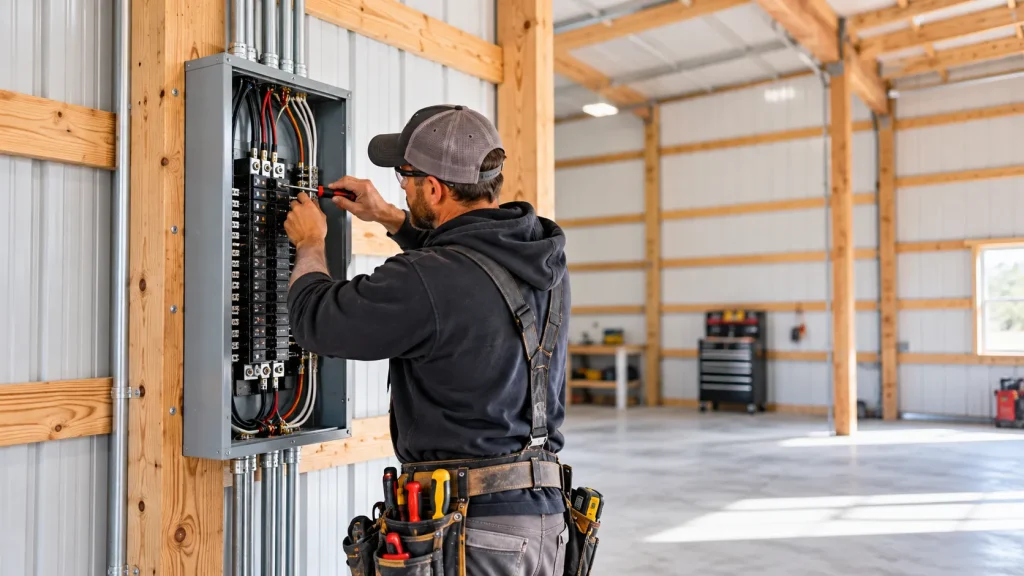
- Electrical permit. Montana requires an electrical permit for electrical installations in new construction. Owners can get a homeowner permit to do their own wiring on their own residence, farm, or ranch, as long as it’s for personal use and not for resale or rental. A power company can’t energize an installation without a permit.
- Plumbing and mechanical permits. The Building Codes Bureau says you need separate permits for electrical, plumbing, and mechanical work. Check with the bureau if your barn will have water lines, a bathroom, or a heating system.
- Zoning. The Helena Valley is a county zoning area with Urban, Suburban, and Rural Residential Mixed-Use districts. The regulations set lot-line setbacks and height limits by district. They also allow accessory buildings only after a principal use is established on the parcel.
- Floodplain permit. The county requires a floodplain permit for any construction in a mapped Special Flood Hazard Area.
- Approach permit. Building a new driveway onto a county road requires an approach permit from Lewis and Clark County Public Works. A Certified Approach Installer has to build it.
- Address application. Parcels outside Helena and East Helena city limits get addresses through the county. If you’re building on a lot that doesn’t have one yet, you’ll need to apply.
Private subdivision covenants and HOA rules can also limit building size, height, colors, or placement. They aren’t government permits, but they’re enforceable, so read them before you finalize a design.
How Building Use Changes the Permit Picture
Use is the biggest factor in unincorporated Lewis and Clark County. Here’s a general comparison for property under state jurisdiction:
|
Building use |
State building permit |
Other approvals to check |
|
Hay barn, equipment shed, or livestock shelter |
Generally exempt |
Zoning, floodplain, electrical if wired |
|
Private shop or garage for personal use |
Generally exempt |
Zoning, floodplain, electrical, septic if plumbed |
|
Shop used for a business |
Generally required |
Zoning, septic, electrical, plumbing |
|
Building with living space |
Exempt from state building permit (fewer than five units) |
Septic, electrical, zoning, energy code |
Inside Helena or East Helena city limits, these exemptions don’t automatically apply. Check with the city first.
What Happens If You Build Without a Required Permit?
The consequences depend on which approval you skip, and some show up immediately. Without a septic permit, Lewis and Clark Public Health doubles the permit fee once construction has started and may add penalties. Without an electrical permit, your power company can’t energize the building, and energizing an unpermitted installation is a misdemeanor under Montana law.
For buildings that need a state building permit, construction generally can’t start until the permit is issued. Working around that can lead to costly corrections, delays, and questions when you sell or finance the property.
How to Check Permit Requirements for Your Property Before You Build
The best time to sort out permits is before you finalize the building’s size and location. These steps cover most rural properties in Lewis and Clark County:
- Confirm your jurisdiction. Find out whether your parcel is inside Helena or East Helena city limits or in the unincorporated county.
- Check zoning. Contact Lewis and Clark County Community Development and Planning to confirm your zoning district, setbacks, and height limits.
- Check floodplain status. Ask the county Floodplain Manager whether any part of your building site is in a Special Flood Hazard Area.
- Plan for septic early. If the building will have a bathroom or sink, contact Lewis and Clark Public Health about a site evaluation and septic permit before construction starts.
- Confirm your exemption. Call the state Building Codes Bureau at (406) 841-2056 or email BUILDINGCODES@MT.GOV to confirm whether your building is exempt.
- Line up electrical permits. Decide whether you’ll pull a homeowner electrical permit or hire a licensed electrician.
- Read your covenants. Check deed restrictions or HOA rules for building limits.
Plan Permits Into Your Project Timeline
Permit review time affects your build schedule. For buildings that need a state permit, the Building Codes Bureau says plan review can take anywhere from a few hours to several weeks. That depends on the bureau’s workload, project size, and how many corrections are needed.
Septic approvals and zoning questions can take time too, and site work can’t start until those are settled. Getting answers early also helps with design decisions like foundation type and building placement.
If you’re still comparing building types, it helps to understand how post-frame construction works before you apply for anything.
Frequently Asked Questions About Storage Sheds in Helena, MT
Does Lewis and Clark County require a building permit outside Helena?
Lewis and Clark County doesn’t run its own certified building code program, so unincorporated areas fall under the state Building Codes Bureau. Farm and ranch buildings, private garages, private storage buildings, and homes with fewer than five units are generally exempt from state building permits. The county still handles zoning, floodplain, and addressing, and Lewis and Clark Public Health handles septic permits.
How much is the building permit fee?
For buildings that need a state permit, the Building Codes Bureau calculates the fee from the International Building Code fee schedule, as modified by state rule. The fee is based on the total construction value, and plan review adds 35 percent to the building permit fee. Helena and East Helena can set their own fees. Exempt buildings don’t pay a state building permit fee, but septic and electrical permits have their own fees.
What is the biggest size building you can build without a permit?
In unincorporated Lewis and Clark County, Montana law exempts farm and ranch buildings and private garages or storage buildings “of any size” from the state building code. Zoning setbacks, height limits, and lot coverage rules still limit what fits on your parcel. Inside Helena city limits, much smaller size limits apply, so check with the city’s Building Division before you plan any detached building.
Do I need a permit for a 10×12 shed?
A 10×12 shed is 120 square feet. In unincorporated Lewis and Clark County, a private storage shed used only for your own belongings is generally exempt from state building permits at any size, although zoning setbacks still apply. Inside Helena, the model residential code exempts one-story detached storage sheds up to 200 square feet. Confirm with the city, since local amendments can change that.
What is exempted in a building permit?
The Building Codes Bureau lists these as exempt from state building permits: farm or ranch buildings; private homes and apartments with four or fewer units that don’t serve transient guests; private storage buildings and garages; and certain mine, refinery, and pulp mill buildings. Electrical, plumbing, septic, and zoning requirements can still apply to exempt buildings. Cities with certified programs set their own exemptions.
Can I build a house without a building permit?
In unincorporated Lewis and Clark County, a single-family home generally doesn’t need a state building permit because Montana exempts homes with fewer than five units, unless local rules say otherwise. You’ll still need a septic permit before construction starts and electrical permits for the wiring. The home also has to meet energy code requirements through the state’s builder self-certification program. If you’re building inside Helena or East Helena, you’ll need a building permit.
Do I need a permit to put electricity in my pole barn?
Yes. Montana requires an electrical permit for electrical installations in new construction, even when the building is exempt from a building permit. Owners can pull a homeowner permit to do their own wiring on their own farm, ranch, or residence for personal use. Your power company can’t connect service to an unpermitted installation.
Planning a Pole Barn in the Helena Valley?
Permit rules shape everything from where your building sits to how it’s wired. H&H Custom Buildings is a family-owned post-frame builder based in the Helena Valley, building shops, garages, and agricultural buildings across the Helena area.
If you’re planning a pole barn, talk with our team about your property, how you’ll use the building, and your timeline before you finalize plans. Call 406-227-2271 or request an estimate online.