Montana Pole Barns: Costs, Styles & What to Expect in 2026
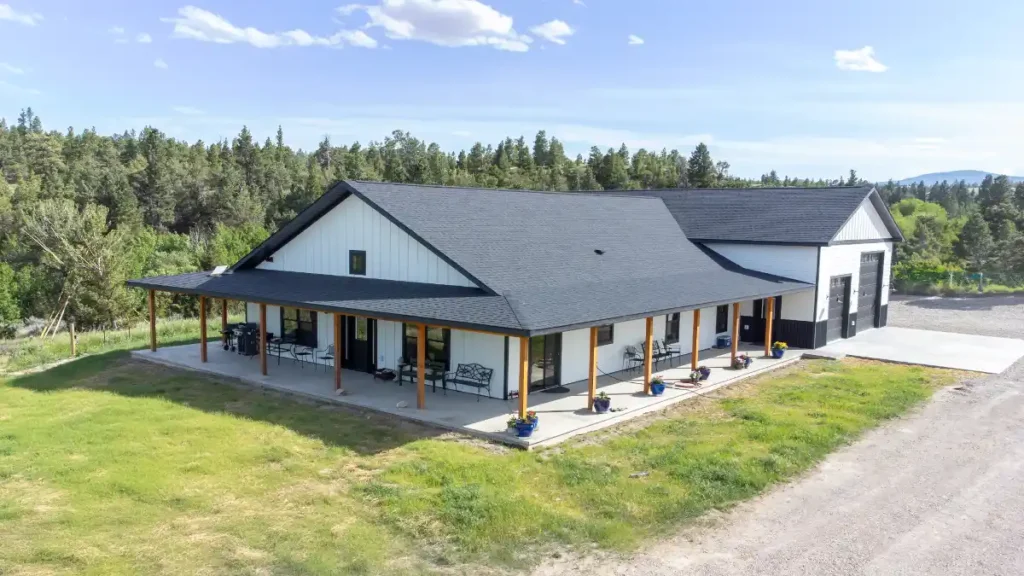
If you’re searching for a pole barn in Montana, you’re really looking for what the construction industry now calls post-frame construction. The term “pole barn” has stuck around because that’s what people grew up calling these buildings. Modern post-frame buildings, though, are engineered structures built to handle Montana’s snow loads, wind exposure, and frost depth, a long way from the simple pole-and-tin sheds the name suggests.
This guide covers what a Montana pole barn actually is, the styles most popular in this region, what affects the cost, and how to decide between a kit and a custom-built structure.
What Is a Pole Barn?
A Montana pole barn is a post-frame building: a structure supported by large, evenly spaced posts set deep into the ground or anchored to concrete piers, instead of a continuous foundation wall. Trusses span across the posts to carry the roof load, and the result is a wide-open interior with no need for load-bearing walls inside.
Modern post frame construction has moved well past the term’s barn-and-farmhouse roots. Buildings nowadays use treated lumber posts, engineered trusses, and steel siding and roofing systems rated for heavy snow and high wind. Many include insulation packages, concrete floors, and finished interiors that make them comfortable for year-round use, not just seasonal storage.
This construction method works for a wide range of uses across Montana:
- Personal and equipment storage
- Workshops and home-based businesses
- Agricultural and livestock buildings
- Equestrian facilities
- Commercial and industrial space
- Residential living quarters built on a post-frame foundation
The appeal comes down to speed of construction, lower cost per square foot than stick-built alternatives, and a structural system that’s proven itself in Montana’s climate for decades.
Popular Pole Barn Styles in Montana
Montana’s mix of agricultural land, recreational properties, and rural acreage means pole barns get used in more ways here than in most states. The most common styles include:
Garages and Shops
From a single-bay personal garage to a multi-bay workshop, these builds are sized around vehicle count, door placement, and workflow. Interior clearance and utility rough-in matter as much as square footage.
Equipment Storage Buildings
Farm and ranch operations need covered space for tractors, implements, and seasonal equipment. These buildings prioritize clear-span access and durable flooring over interior finish.
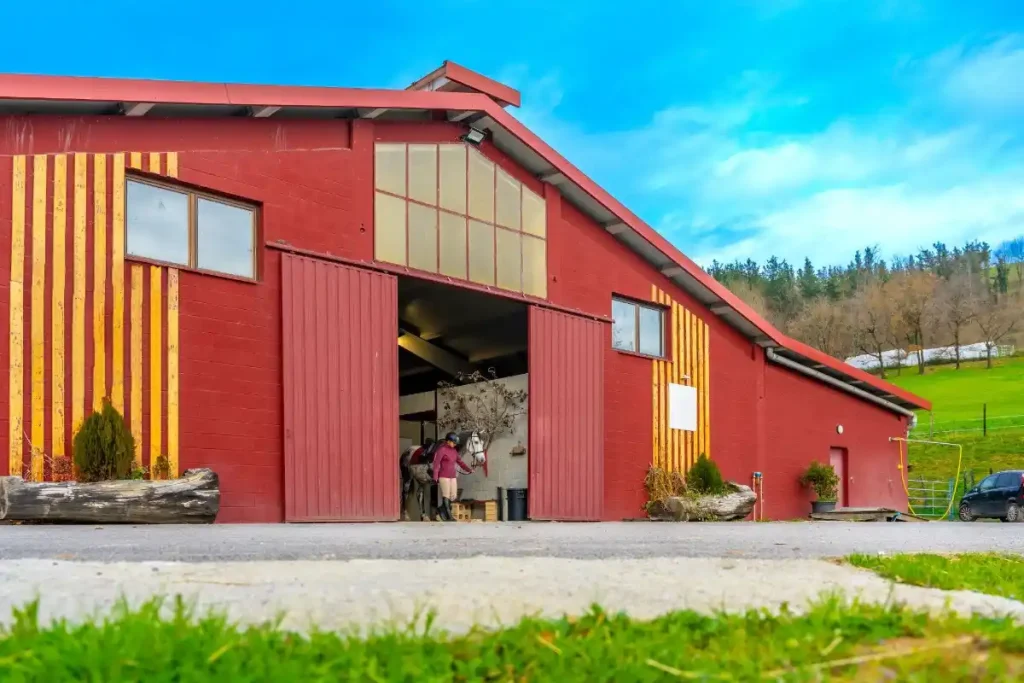
Horse Barns and Riding Arenas
Equestrian buildings require more planning than a standard storage structure. Stall layout, ventilation, and clearance height all affect daily use, not just the building footprint.
Barndominiums
A barndominium combines a post-frame shell with living quarters, built for property owners who want to live on-site while maintaining a working shop, garage, or agricultural space. It’s important to note that a barndominium is not a custom home with a shop attached. It’s a post-frame structure with living space built into the framework, and that distinction affects design, engineering, and cost.
Commercial and Storage Buildings
Warehouses, retail storage, and commercial workspace benefit from post-frame’s lower cost per square foot and faster construction timeline compared to conventional commercial building methods.
Not every pole barn fits neatly into one category. Many Montana projects combine uses, like a shop with attached equipment bays, or a barn with an integrated tack room and equipment storage.
Real Montana Projects
H&H Custom Buildings has completed post-frame projects across Montana for a wide range of uses. The Norris Rd. Arena near Helena is an 80 × 104 clear-span indoor training facility with over 8,300 square feet of unobstructed space, demonstrating how post-frame construction can create large, column-free interiors.
The Boulder Ranch Barn was built as a working calving barn with scissor trusses and natural light panels, while the Ragen Place Shop in Townsend shows how a building can be designed today for future living quarters with framed walls, plumbing rough-ins, and trusses spaced to support finished interiors.
What Does a Pole Barn Cost in Montana?
Pole barn costs in Montana vary significantly based on size, site conditions, and finish level. There’s no single price that applies across the board. A handful of factors drive most of that variation:
Size and Height: Larger footprints and taller sidewalls both increase material and labor costs. Buildings over 16 feet tall typically require additional structural engineering to meet wind and snow load requirements, which adds to the price.
Site Preparation: Grading, excavation, and access all factor into the total cost. A flat, easily accessible building site costs less to prepare than a sloped or remote one.
Engineering and Snow Load Requirements: Montana’s snow load and wind exposure requirements vary by elevation and location across the state. Buildings need to be engineered to meet local codes, and this engineering is built into the project cost rather than an optional add-on.
Foundation Type: Post-frame buildings can be built on concrete piers, a perimeter foundation, or a full concrete slab. Slab foundations cost more upfront but support heated, finished interiors better than gravel floors.
Finishes and Customization: A bare-shell storage building costs far less than a building with insulation, interior finishes, electrical, plumbing, a bathroom, or living quarters. Garage doors, windows, and overhead doors also add cost based on size and quantity.
Because of these factors, the starting range is based on your specific size, location, and finish level. The most accurate way to get that number is a project-specific quote rather than a generic online calculator.
Pole Barn Kits vs. Custom Post Frame Buildings
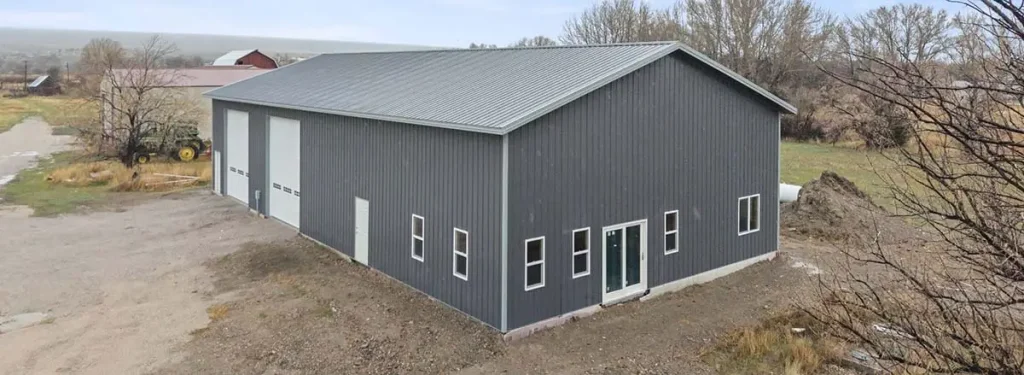
Pole barn kits and barn kits Montana buyers find online promise a straightforward path: order a pre-engineered package, assemble it, and you have a building. For some projects, that works.
Advantages of Kits
- Lower upfront cost for a basic structure
- Faster ordering process with standardized sizes
- Predictable materials list
Limitations of Kits
- Generic engineering that may not account for your specific site’s snow load, wind exposure, or soil conditions
- Limited flexibility for custom layouts, door placement, or interior configuration
- No local labor included. Site prep, foundation work, and assembly typically fall on the buyer to coordinate
- Standardized sizing that may not match your actual use case
When Does Custom Construction Make Sense
Custom post-frame buildings make sense when your site has specific engineering requirements, when you need a layout that doesn’t match a standard kit size, or when you want one contractor handling design through completed construction instead of coordinating multiple trades yourself.
For property owners who want a turnkey result, custom construction also means the engineering is built around your actual property from the start, not adjusted after the fact when a generic kit doesn’t quite fit the site.
Planning for future use is one advantage of custom construction. H&H’s Ragen Place Shop in Townsend was framed from the beginning to accommodate future living quarters, including plumbing rough-ins, partition walls, loft storage, and trusses spaced for future drywall installation. These design decisions are difficult to incorporate into a standard kit after construction begins.
Why Local Montana Experience Matters
Every Montana project presents different engineering challenges. The Norris Rd. Arena near Helena required 80-foot clear-span wood trusses, the maximum practical span for wood-truss post-frame construction, while still providing an open interior for an indoor training facility. Large-span projects like this require engineering expertise beyond what a standard building package can provide.
Not every post frame builder understands what Montana’s conditions demand. Local experience affects nearly every part of a project:
Snow Loads: Montana’s snow load requirements vary by elevation and region, and a building engineered for a different climate can fail to meet local code or worse, fail under the weight of a heavy winter.
Wind Exposure: Open, exposed sites across the Helena Valley and surrounding areas experience high wind loads that need to be factored into truss design and post spacing.
Frost Depth: Montana’s frost depth requirements affect how deep footings and posts need to be set. Builders unfamiliar with local frost lines risk foundation problems that show up years after construction.
Permitting: Permitting requirements vary by county across Montana, and a builder who works regularly in the Helena Valley and surrounding markets already understands the local process.
Local Engineering: Buildings need to be engineered for the specific combination of snow, wind, and soil conditions at your site.
A builder with direct Montana experience designs around these factors from the start, rather than discovering problems during construction or after the building is finished.
Frequently Asked Questions
Are pole barns cheaper than stick-built buildings?
Yes, in most cases. Post-frame construction generally costs less per square foot than traditional stick-built construction because it uses fewer materials and less labor for the same structural strength. Final cost still depends on size, finishes, and site conditions.
Can you live in a pole barn?
Yes. Many Montana property owners build barndominiums, post-frame structures that include living quarters alongside a shop, garage, or storage space. These are built on a post-frame foundation with proper insulation, finishes, and utilities for year-round living.
Do pole barns require concrete?
Not always. Some post-frame buildings use concrete piers only at each post, while others use a full concrete slab floor. The right choice depends on intended use — heated, finished spaces typically call for a slab.
How long does construction take?
Post-frame buildings generally go up faster than comparable stick-built structures, often in a matter of weeks rather than months, depending on size, finishes, and weather conditions during the build.
Ready to Build in Montana?
Before starting your project, browse H&H’s completed Montana builds to see how different owners have used post-frame construction for shops, arenas, ranch buildings, and future living spaces.
Whether you need a simple storage building or a fully custom post-frame structure designed around your property, H&H Custom Buildings brings local Montana experience to every project. Request a free consultation to get a quote built around your specific site, size, and goals.